
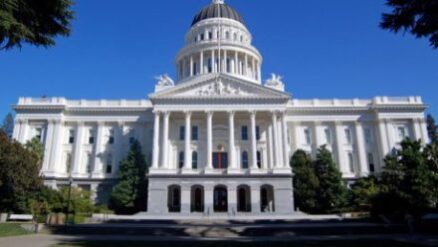
CALIFORNIA GOVERNMENT LAW
Government law (or public law) is a broad area of law practice that deals with the legal framework for local cities and counties (municipal law), state and federal entities, drafting ordinances and legislation, ensuring compliance with laws and regulations, and the rights and responsibilities of individuals in their interactions with state and local government entities.
Government law involves a comprehensive legal system based on common law principles and structured by the state’s constitution. Power is divided among three co-equal branches: the legislative, the executive, and the judicial, all of which are ultimately derived from the sovereignty of the people.
An experienced attorney can provide legal representation to ensure a positive interaction, compliance, due process and fairness.
Sources of California Law
The law in California flows from several hierarchical sources:
U.S. Constitution and Federal Law: As in all U.S. states, the U.S. Constitution is the supreme law of the land.
California Constitution: The foremost source of state law, the California Constitution establishes the structure of the government, enumerates the rights of individuals (including the right to privacy and equal protection), and provides for direct democracy tools such as initiatives, referendums, and recall elections.
Statutory Law: Laws enacted by the State Legislature and signed by the Governor are published in the California Statutes and codified into 29 subject-specific California Codes (e.g., Penal Code, Civil Code, Education Code).
Regulatory and Administrative Law: State agencies create detailed rules and regulations under authority delegated by the Legislature. These are published in the California Code of Regulations and carry the force of law, provided they do not conflict with statutes or the Constitution. Regulatory compliance is generally enforced pursuant to administrative law.
Case Law (Common Law): California has a common law system where decisions from the Supreme Court of California and the California Courts of Appeal serve as binding precedent for lower courts, such as the Superior Court, interpreting the constitution, statutes, and regulations.
City and County Local Ordinances: California counties and incorporated cities operate under municipal law and may pass local ordinances on municipal affairs, which are usually codified in city or county codes. City and county local laws shapes daily life, addressing specific community needs and concerns not always covered by state or federal laws. These laws are passed by the local city council or county board of supervisors. Violations of local ordinances can result in enforcement activities by a city attorney or county counsel including criminal prosecution, code enforcement or litigation. Local elections are governed by California municipal election law.
Several new laws taking effect in 2026 significantly impact California cities and counties, particularly in the areas of housing and homelessness, public safety and law enforcement, municipal operations and governance, and election administration.
Branches of Government
Legislative Branch: The California Legislature passes bills, which are then subject to the Governor’s approval or veto. The Legislature is a bicameral body, consisting of an 80-member Assembly and a 40-member Senate.
Executive Branch: Vested with supreme executive power in the Governor, the California Executive Branch is responsible for executing the laws enacted by the Legislature. It includes numerous state officers and agencies that carry out specific programs and functions, such as public health, transportation, and environmental protection.
Judicial Branch: The California Judicial Branch is responsible for interpreting state laws and the Constitution, settling disputes, and protecting individual rights. It is the largest court system in the nation, with 58 superior (trial) courts (one in each county), six appellate districts, and the California Supreme Court as the highest court.
Key Legal Principles
Separation of Powers: Power is divided among the three branches to ensure checks and balances.
Popular Sovereignty: The people retain ultimate power and can legislate directly through the initiative and referendum process and hold officials accountable via recall.
Individual Rights: The California Constitution, in Article I, Section 1, includes a robust “Declaration of Rights” that guarantees fundamental freedoms such as life, liberty, privacy, and due process, which are enforced through case law as well statutory law including the California Consumer Privacy Act (CCPA), as amended by the California Privacy Rights Act (CPRA), and the California Delete Act.
The Right to Access Government Information: A cornerstone of California government law is the public’s right to information and government transparency, explicitly enshrined in Article I, Section 3(b) of the California Constitution, and codified in laws such as the California Public Records Act (CPRA), Brown Act, and Bagley-Keene Open Meeting Act.
The Right to Ethical Behavior by Government Officials: The public has a right to expect that public officials act in the best interest of the public, not for personal financial gain, as set forth in the laws and regulations encompassing government ethics in California including the Political Reform Act (PRA) and AB 1234 mandatory ethics training.
Contact us by phone or email to learn more about how we can help.